About
Randy’s Creations is one person, a work table, and a lot of paint.
My name is Randy Sligar, and I’m based in Heiskell, Tennessee, just outside Knoxville. I make abstract fluid acrylic paintings, and I make them the slow way — by hand, one at a time, in my own space. I started pouring because I loved what the paint did when I stopped controlling it, and I kept going because people kept stopping at the table.
I take after my mother. She’s eighty-four, she’s always been the creative one in the family, and she’s the reason I started painting at all.
Alongside the paintings I paint glass vases. The glass itself is something I buy — usually brand new, sometimes a box of them somebody is letting go — and I wash each one and pour the same fluid acrylic over it. Most are made two at a time: I stand the vase on top of a canvas and pour over both, so the vase and the painting come out of one pour. Then I work the design with a tilt, a blow dryer, or on a spinning wheel, and once it has set I finish it with a protective coat so the paint won’t fade or take water damage. The glass isn’t mine — the painting on it is.
The one thing I can promise about a painting: nothing here is a copy. Not of someone else’s work, and not even of my own — the paint will not let me make the same piece twice.
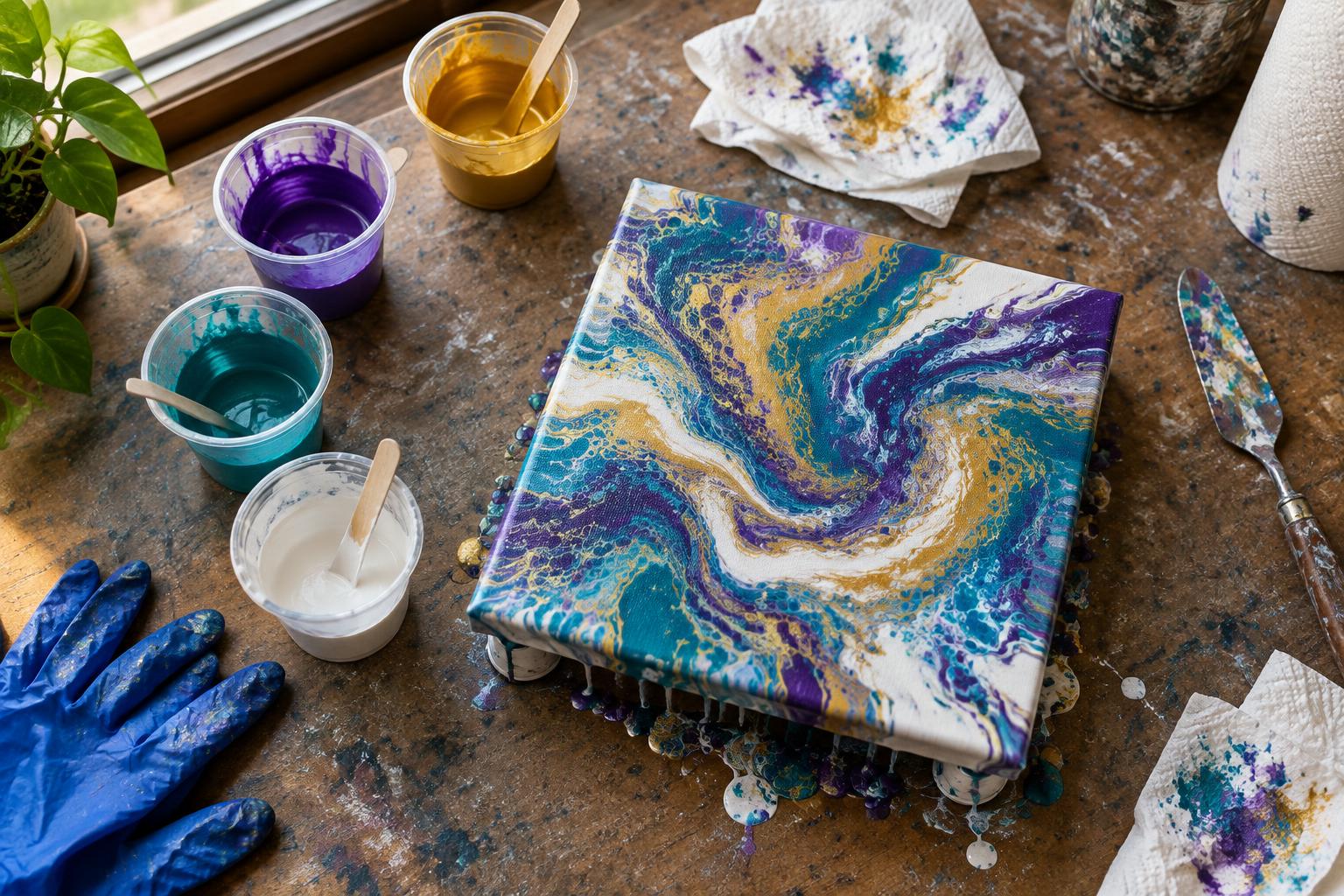
Never the same twice.
The short version
- Painted by
- One pair of hands — mine
- Made of
- Acrylic paint, canvas and rigid panel
- Made where
- My home work table
- Made how
- Poured by hand, then cured flat
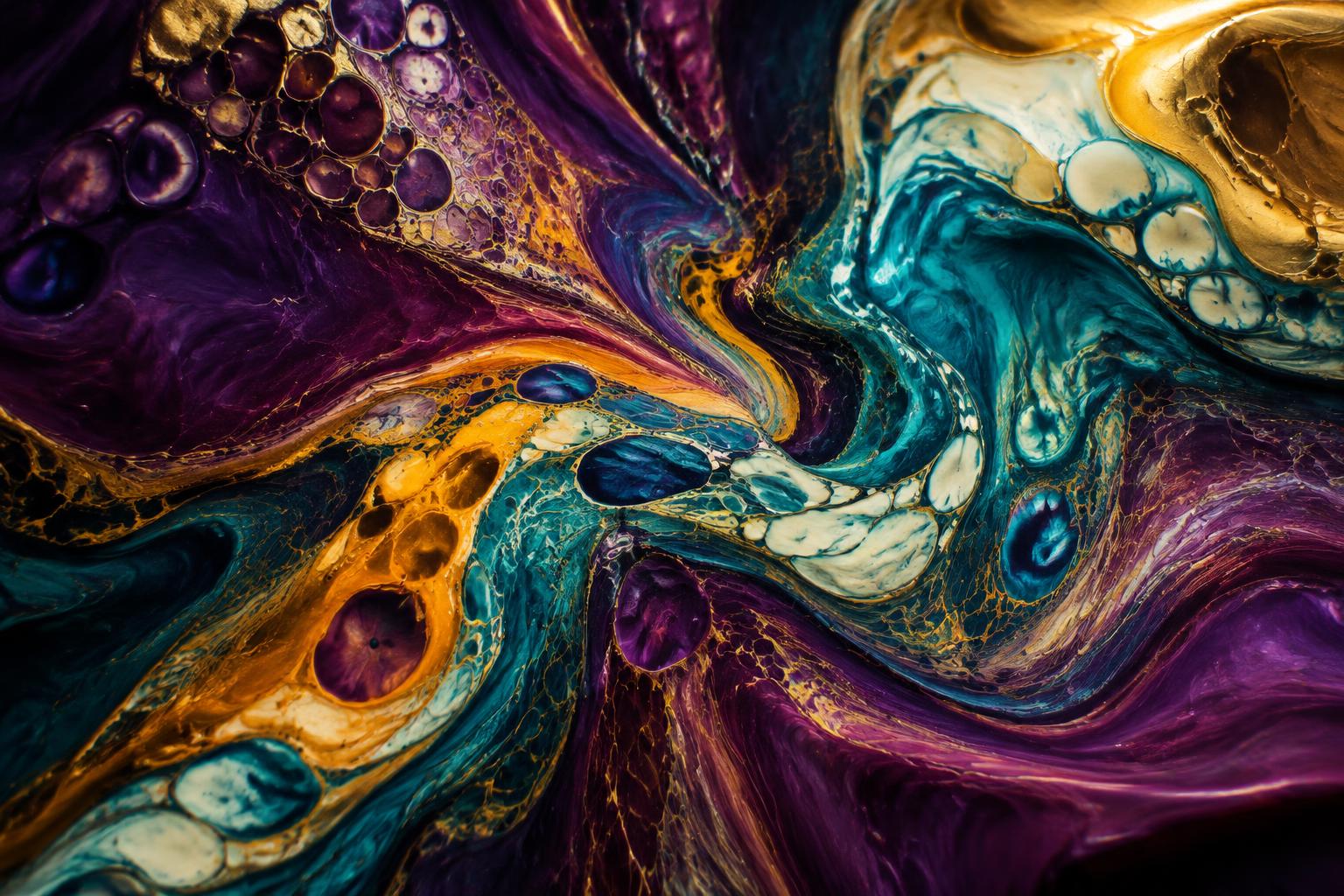
How a pour actually goes
I mix each color separately and thin it until it moves. Then I layer the colors in a cup, turn the cup over onto the canvas, and let it spread. I tilt the piece to push the paint where I want it, torch the surface to open up the cells, and then it does the rest — sometimes in ten minutes, sometimes over a whole afternoon. Once it stops moving I let it cure flat, for days, before it’s touched again. There is no undo. Whatever happens on that surface is what the piece is.
It is not a fast way to make things. It is a very good way to make something that only exists once.
Where it’s made
In the studio
Photographs off the work table — mid-pour, nothing staged.
Every piece here is poured and painted by me, by hand, one at a time, in my studio just outside Knoxville. Paint on the table, a pour half done, a sheet I have just lifted out of it.
No two pours come out the same, so every painting and every vase is a one-off — I could not make the same piece twice if I tried.
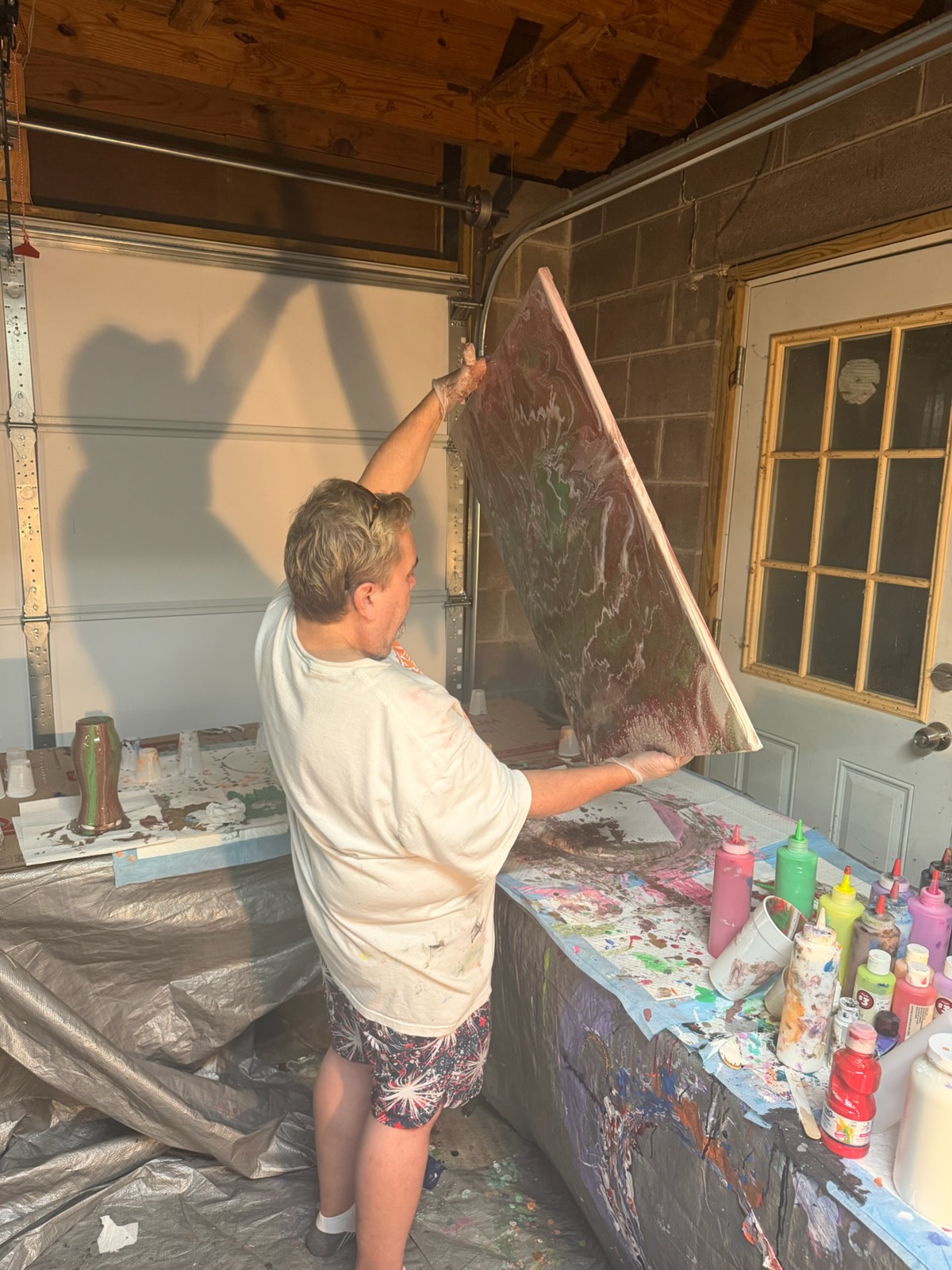
Tipping a big one to move the paint 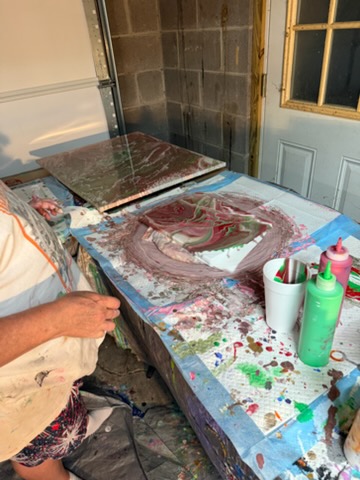
Mid-pour on a round canvas 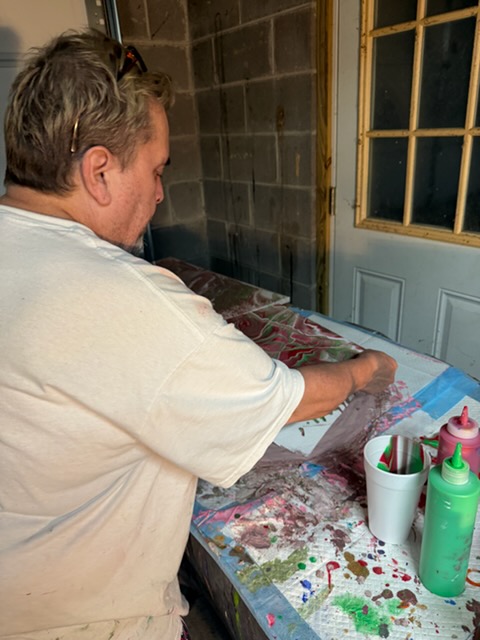
Laying the colors down 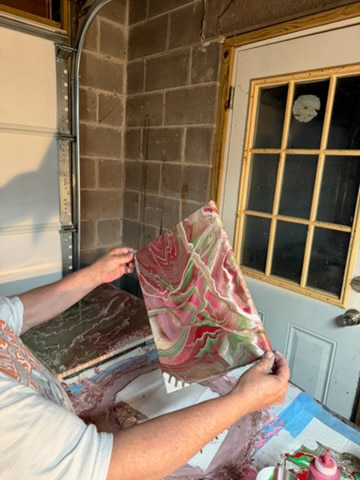
Wet, and still moving
Come say hello
I’m setting up at craft fairs and markets this season. Seeing a pour in person is a different thing from seeing it on a screen — the light catches the cells and the whole piece changes.
See upcoming events →Reach me directly
No contact forms required, though there is one. Call or text and you’ll get me, not a machine — (661) 535-9897.
Contact page →Want one in your colors?
Tell me the palette and I’ll pour it — one canvas, or a pair that hangs together. Every painting comes out different, and that is the whole point.